
What are the main shell materials of metal laptops, and what are the advantages and disadvantages?
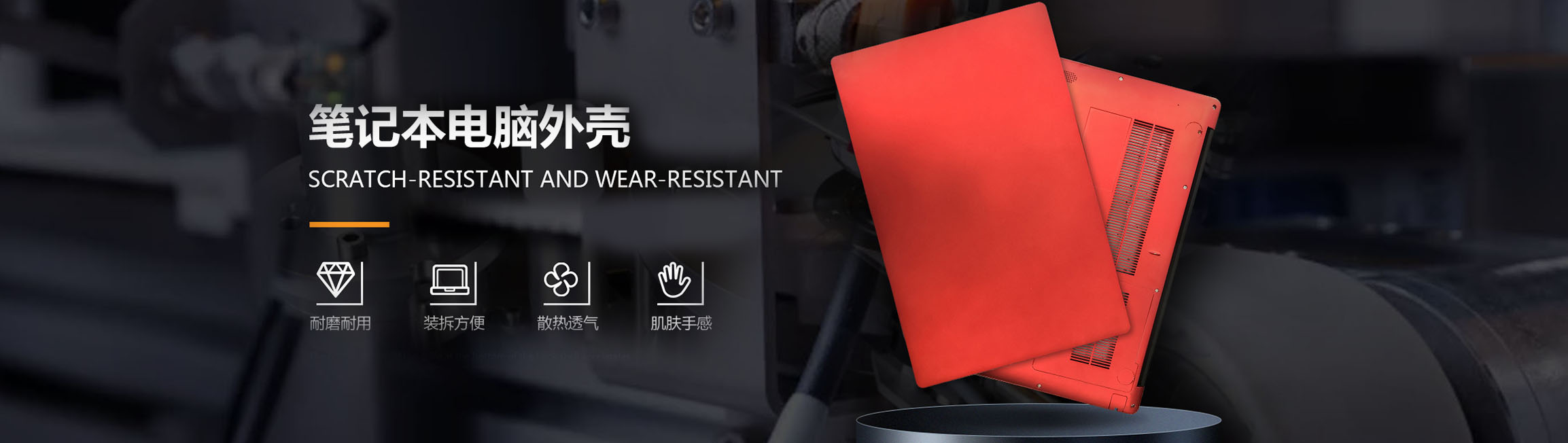
A computer's casing is not only a direct way to protect the body, but also an important factor affecting its cooling effect, "weight" and aesthetics. Common shell materials for notebook computers include: alloy shells include aluminum-magnesium alloys and titanium alloys, and plastic shells include carbon fiber, polycarbonate PC, and ABS engineering plastics.
I don't know if you have noticed that manufacturers used to use "all-metal body" when promoting laptops, but now it seems that the word "all-metal body" has disappeared. The workmanship of notebooks is getting better and better, and notebooks with pure plastic bodies are relatively rare. Why don't manufacturers use "all-metal body" to promote it? This is because now everyone's awareness of rights protection has increased, and it is impossible to use a metal body for the actual notebook shell.
We know that the laptop can be divided into four sides ABCD, A side refers to the top case, B side refers to the screen side, C side refers to the keyboard side, D side refers to the bottom case. Under normal circumstances, the B side will not be made of metal material, because of the existence of the screen, once the deformation occurs, the metal material can easily damage the screen, and even make the screen unusable. Therefore, manufacturers did not use slogans such as "full metal body" when promoting.
Aluminum-magnesium alloy is a metal material commonly used in notebook computers or other digital products. The main element of aluminum-magnesium alloy is aluminum, and then a small amount of magnesium or other metal materials is added to enhance its hardness. Because it is a metal itself, it has exceptional thermal conductivity and strength. Aluminum-magnesium alloy is light in weight, low in density, good in heat dissipation and strong in compression resistance, which can fully meet the requirements of 3C products for high integration, light weight, miniaturization, anti-collision, electromagnetic shielding and heat dissipation. It is several times harder than traditional plastic casings, but only one-third the weight.
And the silver-white magnesium-aluminum alloy shell can make the product more luxurious and beautiful, and it is easy to color. It can be turned into a personalized powder blue and pink through the surface treatment process, which adds a lot of color to the notebook. This is an engineering plastic. There is nothing carbon fiber can't match. Therefore, aluminum-magnesium alloy becomes the casing material of portable notebook computers. The manufacturer's notebook computer products mostly use aluminum-magnesium alloy shell technology.
With the trend of light, thin and portable, manufacturers began to use magnesium alloys or magnesium alloys in pursuit of lightness. Although magnesium-aluminum alloys look similar to aluminum-magnesium alloys, there are obvious differences between the two. Magnesium-aluminum alloys are dominated by magnesium, and aluminum-magnesium alloys are dominated by aluminum. Therefore, magnesium-aluminum alloys are lighter and weaker than aluminum-magnesium alloys. Magnesium alloys are lighter and of course less strong.
More recently, magnesium-lithium alloys have also been used in some machines. As the name suggests, its main material is magnesium, doped with lithium. This metal material is lighter and of course less strong. These notebooks are made of lightweight metal that doesn't feel "metallic" in the hand. And some notebooks have a special coating on the surface that feels more like plastic. Since these metallic materials are essentially free of iron, they cannot be tested with magnets at all.
Metal notebooks are favored by many for their premium unibody design and good feel. The metal notebook has strong integration, smooth feel, and the metal texture looks more stable, and because of the metal body, the heat dissipation is stronger than that of the plastic body. Due to the unique texture of metal materials, a shell with more texture and design can be processed
But that same metal-body notebook has its downsides. First, metal bodies can feel cold in winter, which is fine in summer, but not so good in cold winters; laptops with metal bodies tend to be more expensive.