
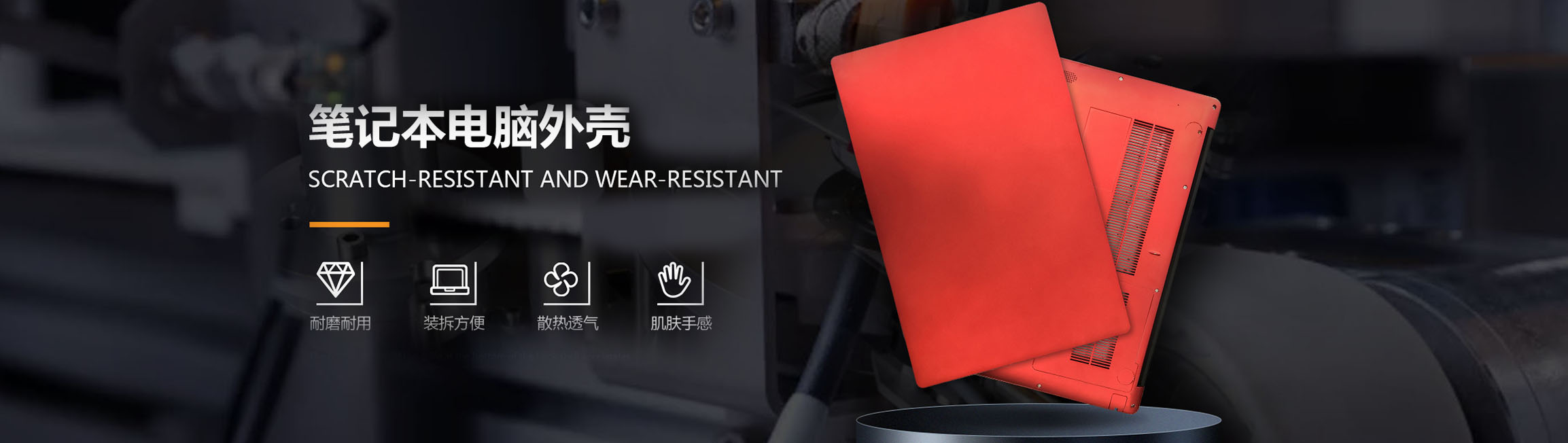
What kinds of materials are there in the laptop shell?
In terms of notebook shell materials, the most common are ordinary ABS engineering plastics, magnesium aluminum alloy materials, carbon fiber composite materials, and titanium alloy materials. ABS, the Chinese name in the chemical industry is a plastic alloy, which is the most widely used main material for notebooks at present.
There is also one called PC+ABS, because this material not only has the excellent heat and weather resistance, dimensional stability and impact resistance of PC resin, but also has the excellent processing fluidity of ABS resin. Therefore, when applied to thin-walled and complex-shaped products, it can not only maintain its excellent performance, but also maintain the formability of plastics and ester materials. ABS material can also be used for automotive high gloss parts.
Magnesium aluminum alloy shell
Compared with ABS engineering plastics, the notebook computer made of magnesium-aluminum alloy seems to have reached a new level. They are superior to ABS engineering plastics in appearance, texture and protection.
Significant weight reduction For consumers who are increasingly looking for light, thin and fashionable, magnesium-aluminum alloys have become an impeccable choice. Coupled with the excellent heat dissipation capacity, people who have a headache for notebook heat dissipation at the moment have also found a better choice.
Laptop casing is the most direct way to protect the body, and it is also an important factor affecting its cooling effect, "weight" and aesthetics. The commonly used shell materials for notebook computers are: aluminum-magnesium alloy and titanium alloy for the alloy shell, and carbon fiber, PC-GF- (polycarbonate PC) and ABS engineering plastic for the plastic shell.